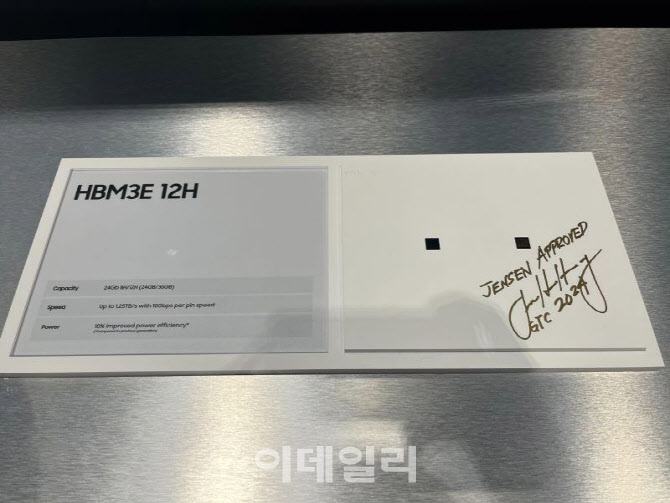
차세대 HBM 과시한 삼성·SK…엔비디아 GTC서 승자는?
There are many ways to approach the topic of [article_title]. One could focus on its history, its significance in Korean culture, or even its impact on contemporary society. In this article, we will explore the importance of [article_title] in Korean culture.
[Article_title] refers to the traditional Korean art of paper folding. This practice has been passed down through generations and is a skill that is valued and cherished in Korean society. The art of [article_title] is not just about creating intricate designs and shapes, but it also holds cultural and symbolic meanings.
In Korean culture, [article_title] has been used in many different ways. For example, it is often used in celebrations and ceremonies, such as weddings and birthdays. Origami figures are also thought to bring good luck and prosperity, making them popular gifts for loved ones. Additionally, [article_title] is often used as a form of meditation and relaxation, as the process of folding paper requires focus and careful attention to detail.
The practice of [article_title] has also influenced other areas of Korean culture, such as design and fashion. Many Korean designers and artists incorporate origami-inspired elements into their work, creating unique and visually striking pieces. The geometric shapes and intricate patterns of [article_title] have inspired fashion designers to create garments that are both stylish and innovative.
Overall, [article_title] plays a significant role in Korean culture, serving as a symbol of tradition, creativity, and mindfulness. Whether used in ceremonies or as a form of artistic expression, [article_title] continues to be a beloved practice that connects people to their heritage and brings joy and beauty into their lives.