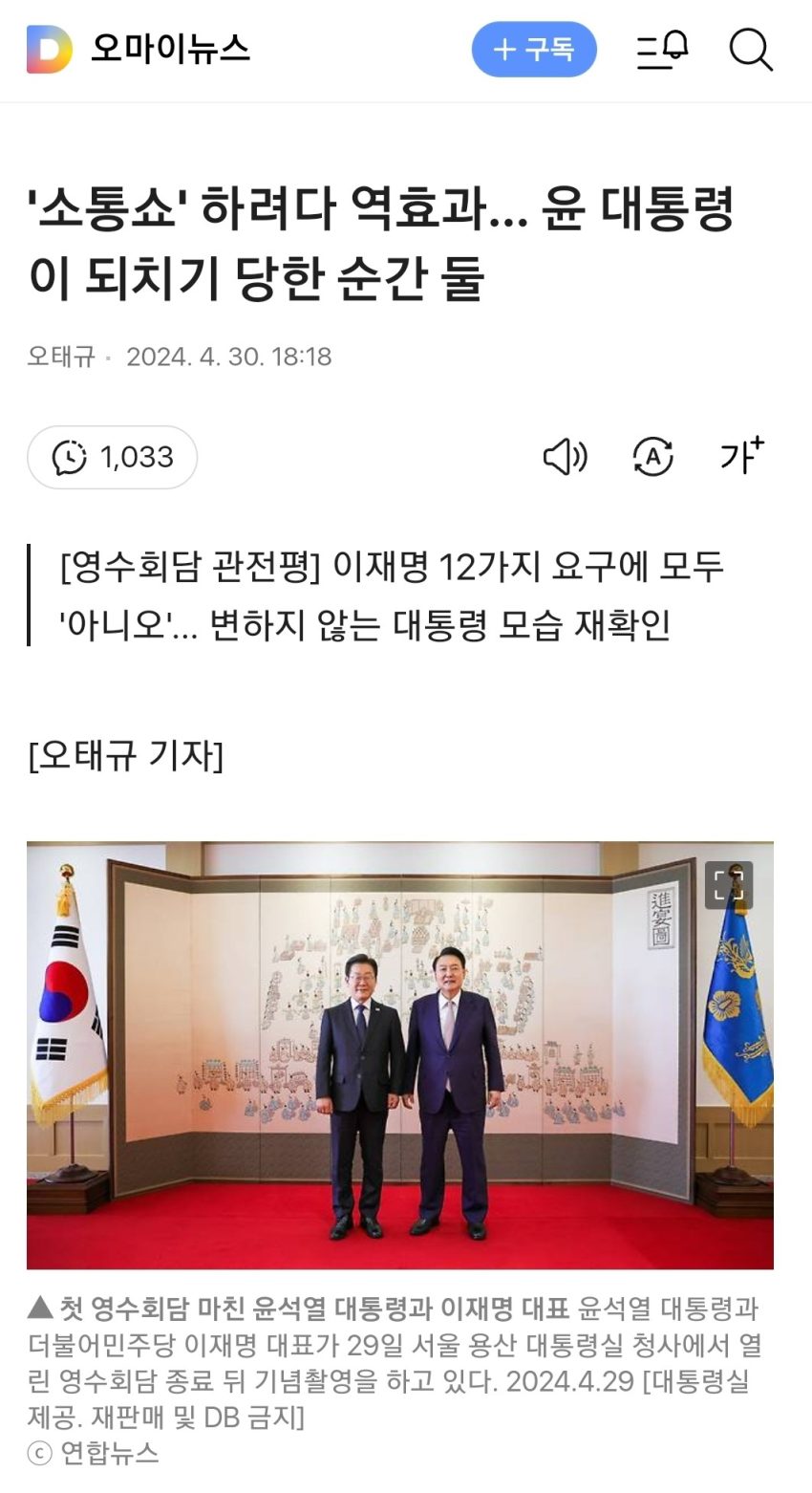
‘소통쇼’ 하려다 역효과… 윤 대통령이 되치기 당한 순간 둘 > 짤탱ㅋ?
Like English and many other languages, Korean also has articles that play an important role in grammar and sentence structure. In Korean, there are two main types of articles: definite and indefinite articles.
The definite article in Korean is “그” (geu) and it is equivalent to “the” in English. It is used before a noun to specify a particular person or thing that is known to both the speaker and the listener. For example, “그 사람” (geu saram) means “that person” in English.
On the other hand, the indefinite article in Korean is “한” (han) and it is equivalent to “a” or “an” in English. It is used before a noun to refer to any one of a group of people or things. For example, “한 책” (han chaek) means “a book” in English.
Unlike in English, Korean articles do not change based on the gender or number of the noun that follows them. This means that “그 사람” can refer to either a man or a woman, and “한 책” can refer to both a single book or multiple books.
In Korean, articles are placed before the noun they modify. However, it is important to note that not all Korean nouns require an article. In some cases, articles can be omitted without changing the meaning of the sentence.
In conclusion, articles play an important role in Korean grammar and sentence structure. Understanding the difference between definite and indefinite articles can help Korean learners communicate more effectively in both spoken and written language.